


Kumam Clan Leaders Push for Communal Child Upbringing to Curb Rising Teenage Pregnancies
The Kumam community and clan leaders are calling for the restoration of communal responsibility in raising children, arguing that the decline of collective upbringing has contributed to rising cases of teenage pregnancy, early marriages and deteriorating morals among young people.
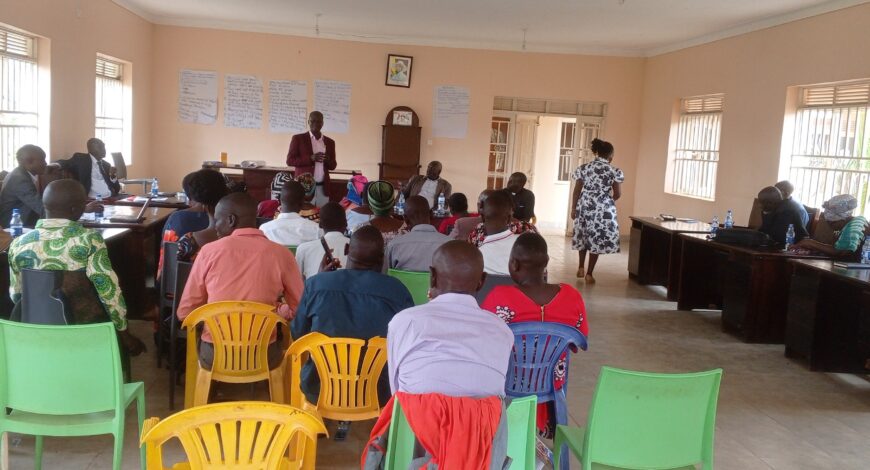
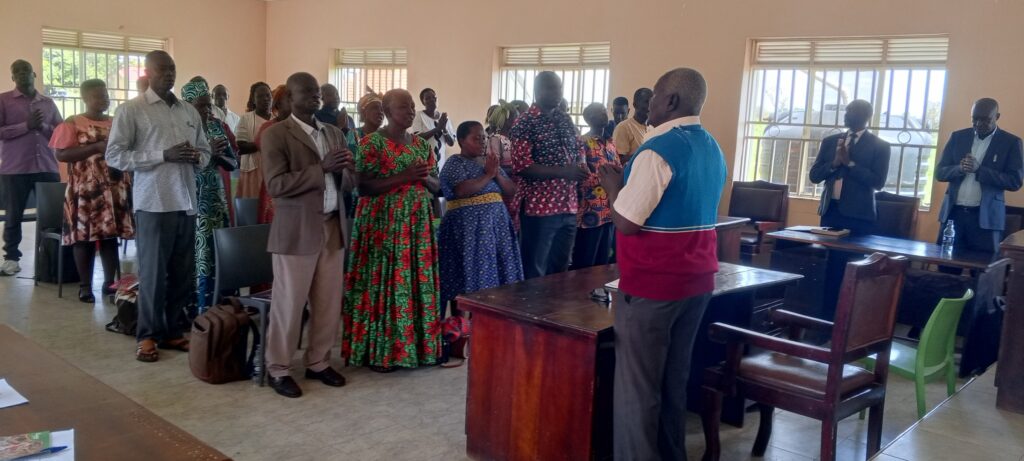
The appeal was made during a two-day training on gender-based violence, teenage pregnancy, and early child marriage held at Kalaki district headquarters. The training was organized by the Kumam Cultural Heritage with support from the Council of Traditional Leaders in Africa.
According to the Deputy Prime Minister of the Kumam Cultural Heritage, Peter Ekilu, the training covered women’s rights, following a survey by the cultural institution which revealed that some people are still unaware of women’s rights to property ownership and the issues of gender-based violence, teenage pregnancy, and early child marriage.
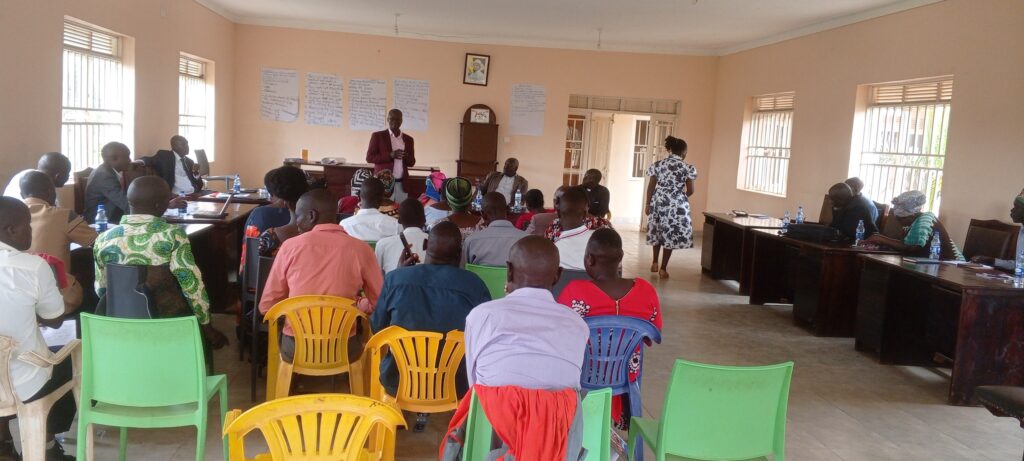
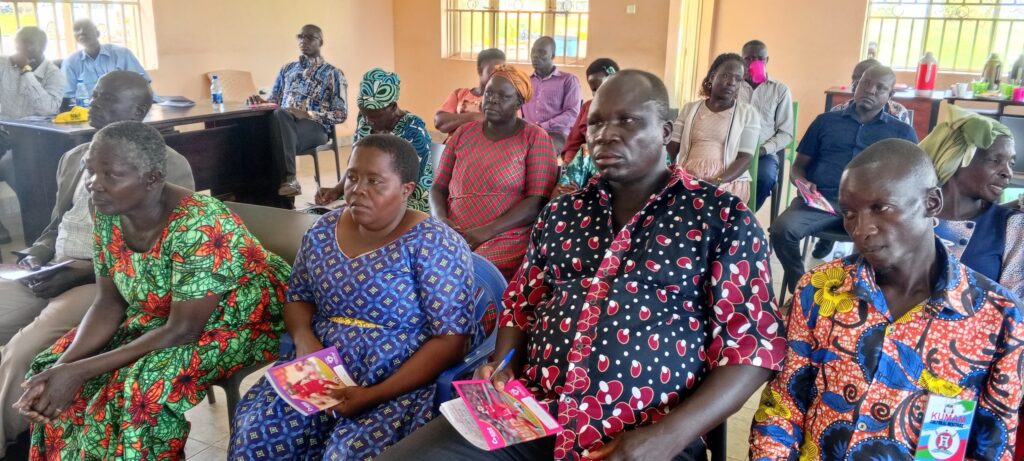
The meeting aimed to equip Kumam clan leaders and women leaders with knowledge so they could effectively disseminate these messages to their communities.
The meeting brought together clan leaders, district officials and community members who discussed the growing challenges affecting children and adolescents in the Kumam community in Kalaki District.
Simon Eyaku one of participants in the training said raising children was considered a collective responsibility of the entire community, where any adult could correct or guide a child found behaving inappropriately.
However, he notes that this practice has gradually weakened due to changing social attitudes and what many described as the misinterpretation of children’s rights.
According to several clan leaders, the inability of community members to correct children who are not their own has left many young people without proper guidance, exposing them to risky behaviors such as early sexual activity, alcohol consumption and school dropout.
Speaking during the discussions, Simon Edyamu, the Minister for Youth Affairs in Kumam Cultural Heritage, said the current situation has made it difficult for elders to instill discipline among young people.
He explained that many community members fear confronting children engaged in wrong behavior because they risk being reported to the police for alleged corporal punishment.
“You can find a child doing something clearly wrong, but because of fear of being dragged to police for beating someone’s child, many people keep quiet,” Edyamu said. “Yet in the past, the proper upbringing of a child was the responsibility of the whole community.”
He noted that the weakening of communal authority has contributed to increasing cases of young people engaging in behaviors that eventually lead to teenage pregnancies and early marriages.
Edyamu said some teenagers have begun smoking, drinking alcohol and engaging in sexual relationships at a young age. When confronted, he added, some children challenge elders by asking whether they are their parents.
“As a result, many girls are producing at a tender age, entering early marriages or remaining single mothers while still young,” he said.
He also raised concern about the growing influence of material desires among teenage girls, saying that some seek relationships with older men in exchange for money and gifts. According to him, the desire for luxury items such as fashionable clothing and phones has pushed some girls to seek support from older men who exploit them sexually.
“These girls want things they cannot afford, and some older men take advantage by offering gifts in exchange for sex,” he said.
He further criticized what he described as poor dressing among some young girls, saying it contributes to moral decline and exposes them to exploitation.
To address the situation, Edyamu said the cultural institution is exploring ways of strengthening clan structures so that communities can play a more active role in guiding and disciplining children.
He emphasized that restoring communal responsibility for raising children would help rebuild moral values and protect young people from harmful behaviors.
The concerns raised by clan leaders were echoed by education officials in the district, who reported that teenage pregnancy and early marriage continue to affect many school-going children.
Catherine Abago, the District Inspector of Schools in Kalaki, said parental neglect and weak supervision of children are among the leading causes of teenage pregnancy in the district.
According to Abago, many parents have become permissive and no longer closely monitor their children’s activities.
She explained that children are often allowed to move freely without supervision, including attending social gatherings such as wedding celebrations where they interact freely with adults and other youths.
“This lack of supervision exposes girls to early pregnancies,” Abago said. “When the girl becomes pregnant, the family may force her into marriage at an early age.”
Abago also identified domestic violence and family breakdown as contributing factors. She said when parents separate due to marital conflicts, children are often left without proper guidance and support.
“In some homes the father and mother separate, and the father brings another woman,” she explained. “The new family situation may leave the child neglected, and some children end up running to the streets.”
According to Abago, children who lack family support sometimes become involved with older partners who provide them with financial assistance.
“In such situations, boys may get involved with older women while girls may find themselves with ‘sugar daddies,’ which eventually leads to pregnancy and early marriage,” she said.
Poverty also plays a significant role in the problem. Abago explained that many families struggle to provide basic needs for their children, including school materials and personal necessities, leaving some girls vulnerable to exploitation by older men who promise financial support.
“A girl child requires a lot of care,” she said. “When parents fail to provide basic needs, some girls are easily deceived by older men in the community.”
Abago said teenage pregnancy has become a recurring issue in the district’s schools.
She revealed that during the previous Primary Leaving Examinations (PLE), at least five pregnant candidates were registered to sit for the exams. While education policy allows pregnant candidates to sit examinations, she said one of the girls was unable to complete the exams due to medical complications.
“Every year we record cases of early pregnancies,” Abago said. “Some are reported to the education department, but many others are never reported.”
She warned that teenage pregnancy and early marriage are major contributors to school dropout, especially among girls.
To address the problem, Abago supported calls for the restoration of communal child upbringing. She said that in earlier generations, any adult in the community could correct a child who was behaving inappropriately, which helped maintain discipline and social order.
“If another parent could take charge of another person’s child, then it helped bring up children with proper morals,” she said.

Community development officials also highlighted the role of clan leaders in addressing the issue.
Esupu Richard, the Community Development Officer in Kalaki District, said clan leaders interact with young people regularly and therefore have a unique opportunity to influence their behavior.
“These children belong to the clan,” Richard said. “The clan leaders are the ones who see them daily, so they have a big role to play in guiding them.”
He said clan leaders should ensure that children are guided collectively by the community rather than leaving the responsibility entirely to individual families.
“Children should not only be seen as belonging to a particular parent,” he said. “They should be seen as children of the clan.”
He also implored parents and clan leaders to limit children’s movements at night and discourage them from attending late-night gatherings such as traditional dance events locally known as “okadibongs,” where many teenagers meet and sometimes form relationships that result in pregnancy.
He clarified that community involvement in disciplining children does not violate the law as long as it does not involve abuse or harsh punishment.
“The law protects children from severe punishment,” he said. “But disciplining a child to guide them morally is different from abuse.”
He further warned that those involved in child marriage or defilement face serious legal consequences under Ugandan law, including imprisonment.



Comments are closed